Description


Equipment Evaluation | Last Updated: October 2026
BUILT FOR THROUGHPUT, NOT JUST THE BROCHURE
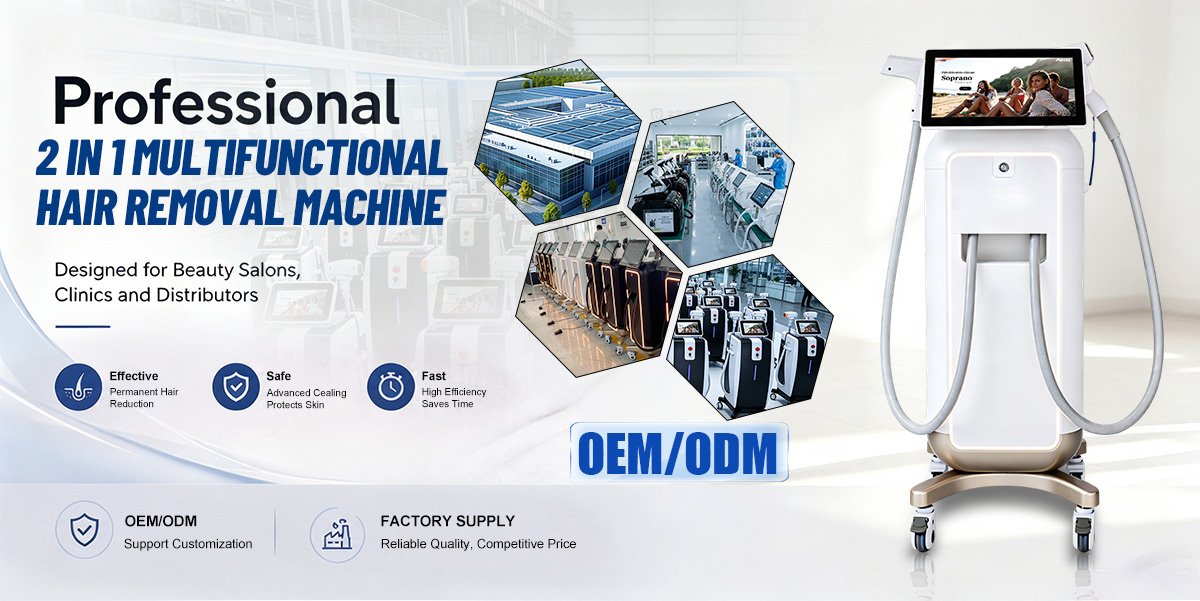
16 Bar 70 Million Shots Diode Laser: High-Volume 2-in-1 Platform
Most clinics do not need a laser with the longest specification sheet. They need a machine that does not slow down when the booking calendar is full. The 16 bar 70 million shots diode laser addresses a specific operational bottleneck: component degradation and handpiece replacement under heavy daily use. This evaluation breaks down where the extra bar count and shot rating actually matter—and where they do not.
16 Laser Bars
Higher total energy density and better heat distribution than 5- or 10-bar stacks.
70M Shots Rated
A service-life figure intended for multi-year heavy use before source replacement.
2-in-1 Design
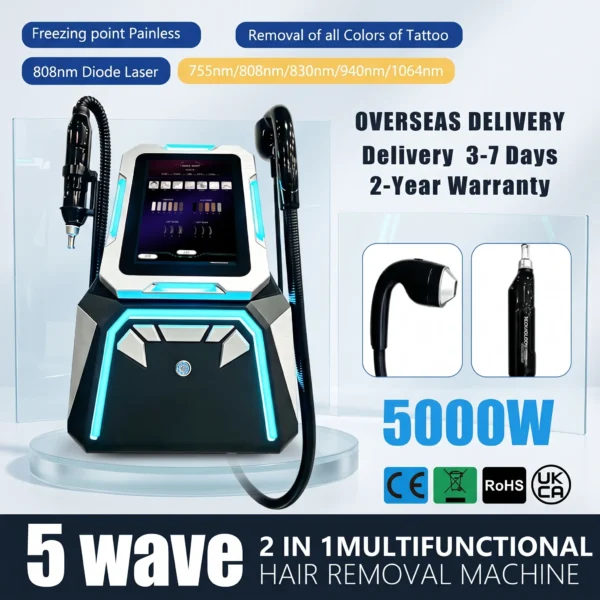
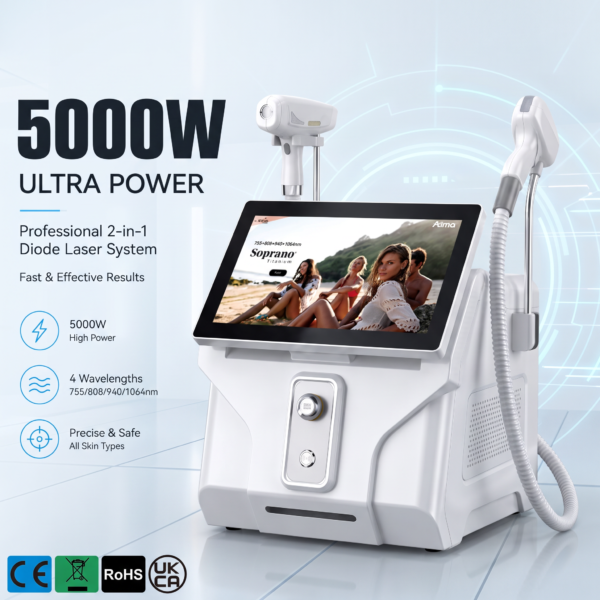
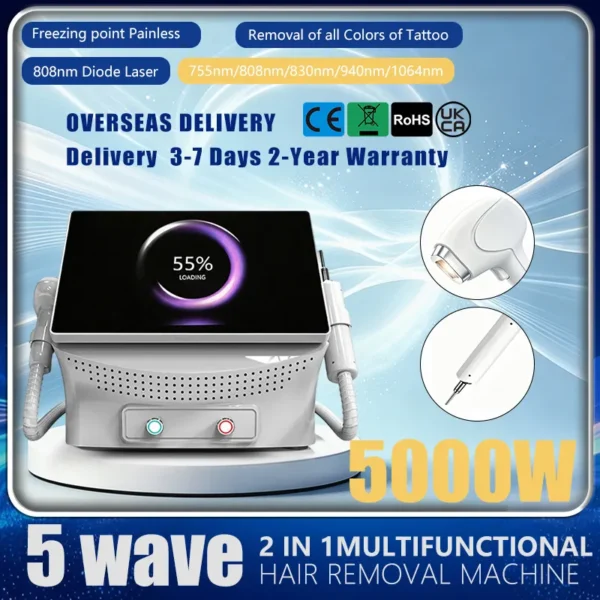
Diode hair removal + dedicated picosecond handpiece for tattoo and pigment.
Quick Answer: Who Is This Platform For?
This system is best suited for clinics and salons where diode laser hair removal is a primary revenue line, not an occasional add-on. If you are running 4–8 full-price sessions per day and cannot afford handpiece downtime, the 16-bar stack and 70-million-shot rating offer a longer replacement cycle than standard 10-bar platforms. If your volume is low or you are opening a new location with uncertain demand, a lower-bar-count system may deliver a faster payback.
The 16-Bar Advantage: What Extra Bars Actually Change
Diode laser stacks are built from multiple bars. Moving from 10 bars to 16 bars is not simply a power increase; it changes how the system manages heat and energy distribution[reference:1].
| Practical Effect |
Why It Matters for a Clinic |
| Higher total energy density |
Faster coverage on large areas (legs, back) without raising perceived discomfort. |
| Better heat dissipation |
Less thermal stress on individual bars, which supports the 70-million-shot rating. |
| More uniform beam profile |
Reduces missed patches and inconsistent energy delivery across the treatment area. |
For buyers comparing a professional hair laser machine, the bar count is a more meaningful durability indicator than a single wattage number.
Pre-Ignition: Protecting the 70-Million-Shot Investment
A 16-bar stack is an expensive component. The Pre-Ignition function is designed to reduce the electrical and thermal shock that occurs when a high-power laser fires from a cold or standby state.
In practice, this means the system ramps up the internal energy path before delivering the treatment pulse. The intended benefit is twofold: more stable energy from the first shot of the day, and a longer effective service life for the bar stack. Whether this extends the replacement interval beyond the rated 70 million shots is a question to confirm with the factory’s service data, but the engineering logic is sound for high-volume environments.
6 Wavelengths & the 2-in-1 Picosecond Module
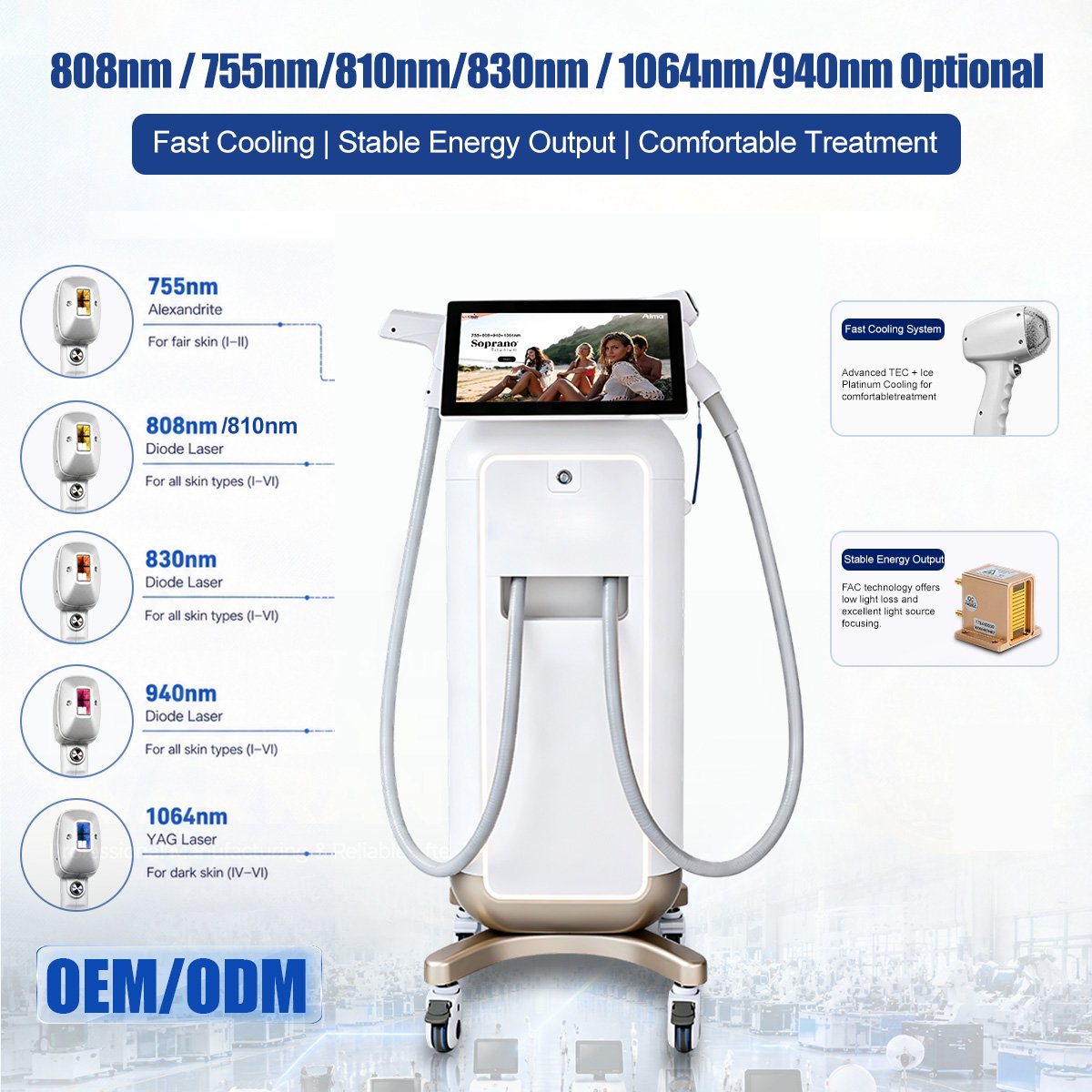
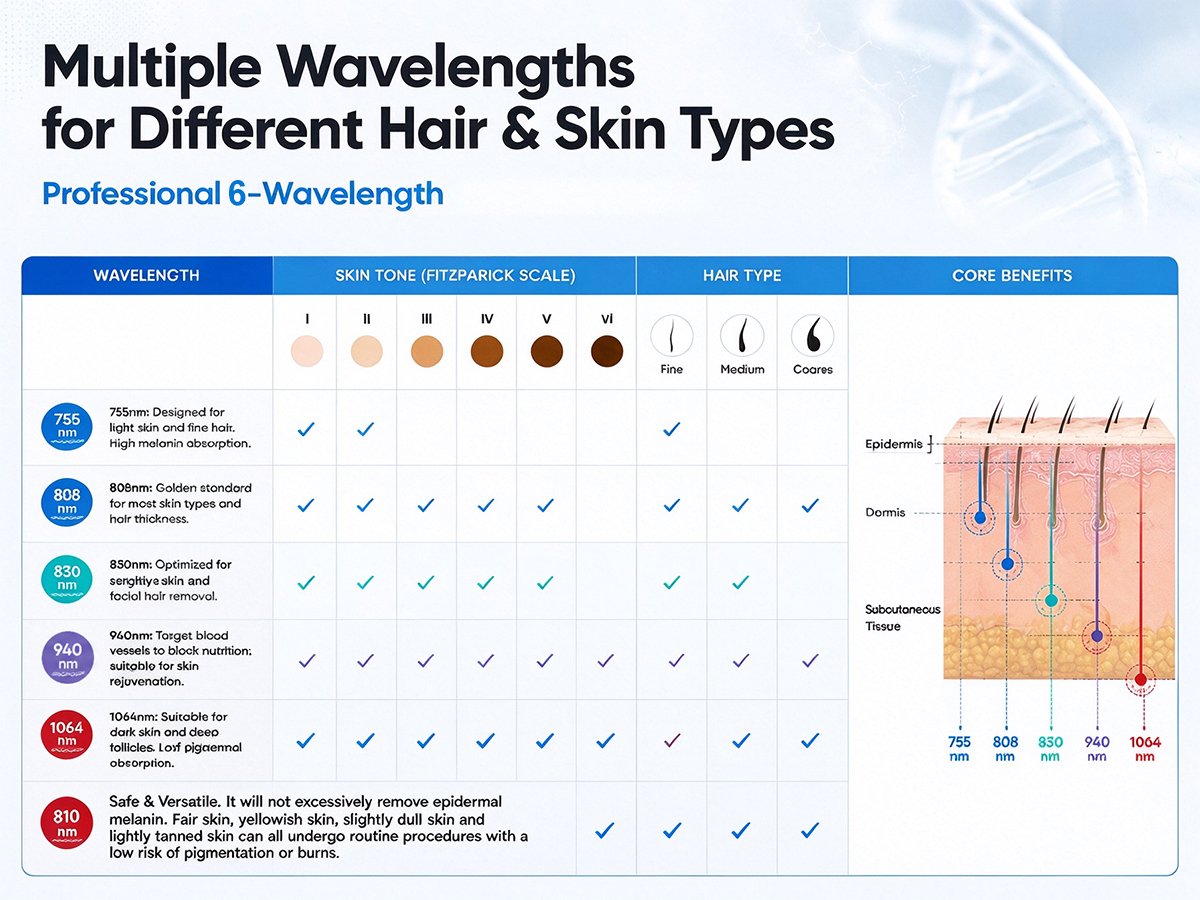
The diode side covers 755nm, 808nm, 810nm, 830nm, 940nm, and 1064nm. This spread allows operators to address Fitzpatrick I–VI without switching to a different platform, which is useful for clinics with diverse patient demographics.
The second handpiece is a dedicated picosecond laser for tattoo and pigment clearance. It is not a repurposed diode mode. The commercial value here is straightforward: tattoo removal sessions often carry higher per-treatment pricing and can be bundled with hair removal packages to increase average patient value.
Configuration Status: What Is Confirmed vs. What to Verify
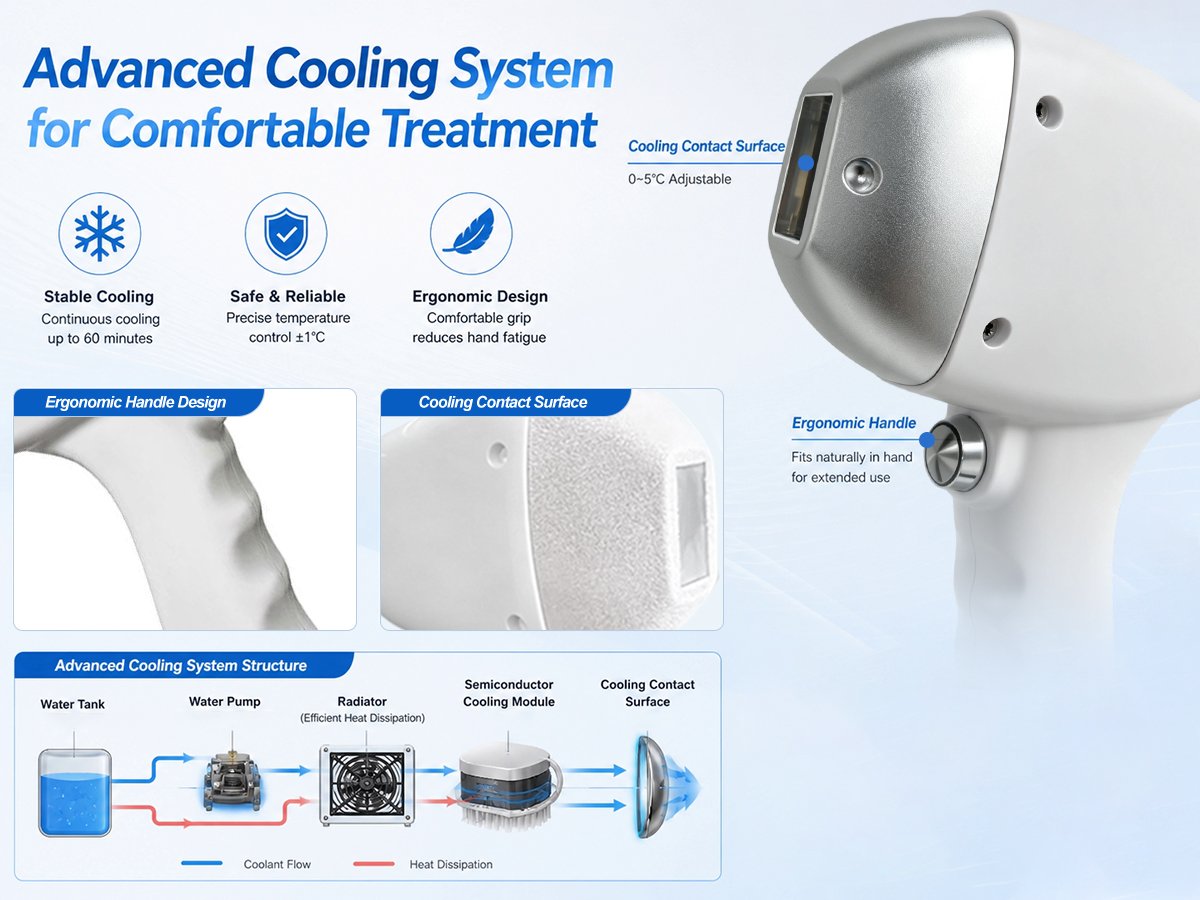
The public product data confirms the bar count, shot rating, wavelength spread, cooling type (sapphire contact), and dual-handpiece architecture. However, several procurement-critical figures are not published and should be requested before purchase:
- Total peak power (W) and fluence range (J/cm²).
- Exact pulse duration of the picosecond handpiece.
- Spot size options for both handpieces.
- Certification documents (CE, FDA, or regional equivalents).
- Warranty terms for the 16-bar stack specifically, as opposed to the general machine warranty.
These are standard due-diligence items for any 2-in-1 platform procurement, not red flags specific to this model.
Buyer Questions (FAQ)
Is 70 million shots a realistic number or a marketing figure?
Shot ratings for diode stacks are typically based on accelerated life testing, not a single clinic’s real-world usage. The number is useful for comparing durability between platforms, but actual service life depends on cooling maintenance, operating temperature, and treatment settings. Ask the factory for the test conditions behind the 70M rating.
Can I run both handpieces in the same day without waiting?
Yes. The diode and picosecond handpieces are separate modules. You can alternate between hair removal and tattoo sessions without a cooldown period between modalities, provided the internal cooling system is maintained correctly.
What is the main trade-off compared to a 10-bar system?
The 16-bar system generally costs more upfront and may require more robust electrical and cooling infrastructure. The return comes in fewer replacement cycles and less downtime. For a clinic running high daily volume, that trade-off usually favors the 16-bar platform; for a lower-volume practice, a 10-bar system may be the more rational financial choice.
Request the Procurement Data Sheet
Get the confirmed peak power, fluence range, picosecond pulse duration, certification list, and stack-specific warranty terms for this 16-bar platform.
Send Inquiry