PROFESSIONAL EQUIPMENT SAFETY
Laser Safety & International Compliance
A practical overview of device safeguards, treatment workflows and market-specific compliance documentation for professional aesthetic laser equipment.
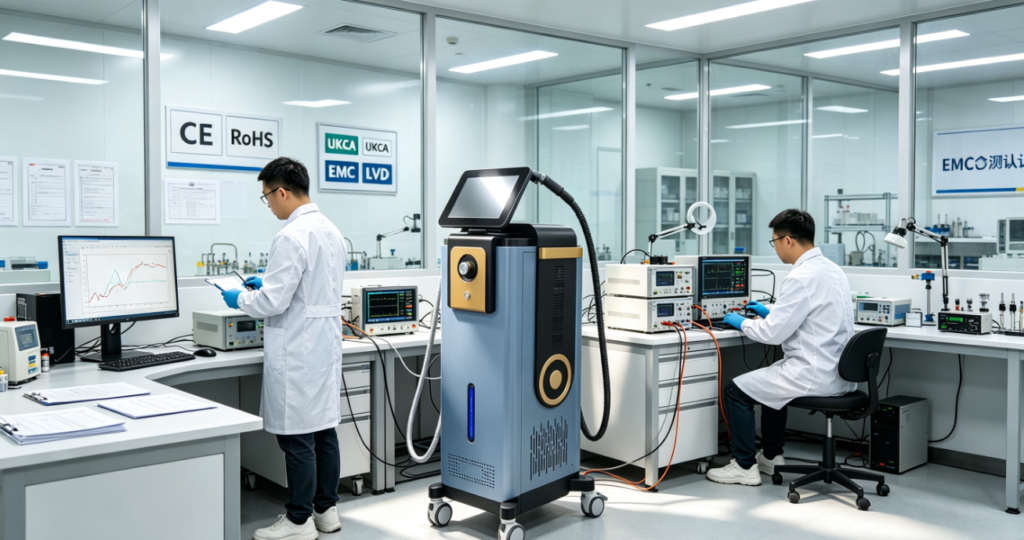
Why Safety Matters in Professional Clinics
Equipment safeguards work together with provider training, patient assessment, protective eyewear, documented protocols and preventive maintenance.
Patient Protection
Appropriate screening, parameter selection, protective equipment and device safeguards help providers manage treatment-related risks.
Regulatory Readiness
Model-specific declarations, reports, labels and technical files support review for the intended market and device classification.
Clinic Confidence
Clear operating procedures, service support and traceable documentation help clinics maintain consistent safety practices.
Device Safeguards for Professional Treatments
Feature availability and behavior vary by technology, handpiece and model; confirm the supplied technical specification.
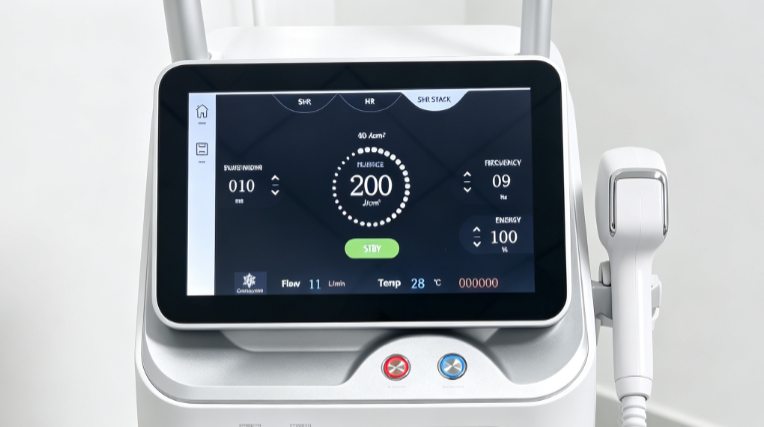
ENGINEERED SAFEGUARDS
Controls Designed Around Professional Operation
Safety controls should be evaluated as part of the complete system: operator access, emergency shutdown, cooling, status monitoring, treatment parameters and service documentation.
Important: exact safeguards vary by model and configuration. Confirm the user manual and technical specification before purchase.
Configurable Energy Control
Provider-directed settings and system controls support device-specific energy delivery within documented operating ranges.
Cooling & Temperature Management
Selected systems use contact, water-circulation or other cooling methods to support thermal management and treatment comfort.
System Status Monitoring
Applicable sensors and status indicators can support monitoring of handpiece connection, temperature, flow or operating conditions.
Emergency Stop & Key Control
Emergency-stop and key-switch functions, where supplied, support rapid shutdown and controlled access to equipment operation.
Diagnostics & Fault Alerts
Selected models provide startup checks, operating alerts or fault codes to assist trained operators and service personnel.
International Compliance Documentation
Applicable markings, directives, standards and reports depend on the exact model, intended purpose, classification and destination market.
DOCUMENTATION REVIEW
Verify the Exact Product, Model and Market
Professional buyers should review the declaration, reports, product label, manufacturer details, intended use and applicable market route as one traceable documentation set.
Use authentic model-specific files in this section. Do not substitute decorative certificate graphics or unverified registration numbers.

CE
EU conformity marking supported by the applicable conformity assessment and declaration for the specific product.
RoHS
Documentation addressing applicable restrictions on specified hazardous substances in electrical and electronic equipment.
UKCA
Great Britain conformity marking where applicable; market-access routes must be reviewed for the device and current transition rules.
EMC
Applicable electromagnetic compatibility testing and documentation addressing emissions and immunity requirements.
Electrical Safety
Applicable electrical-safety requirements, test reports and standards must be confirmed for the specific equipment category.
Verify Documentation by Model and Market
Before purchasing or importing equipment, request the exact model number, intended purpose, declaration of conformity, certificate where applicable, test reports, labels, instructions for use and local registration information.
Safety Throughout the Treatment Journey
A complete safety workflow extends beyond the device itself.
1
Pre-Treatment
Consultation, contraindication screening, skin and target assessment, eyewear selection and parameter planning.
2
Treatment Setup
System inspection, handpiece connection, cooling check, room controls and device-specific test procedures.
3
Energy Delivery
Provider monitoring, appropriate contact and technique, treatment endpoint observation and response management.
4
Aftercare & Maintenance
Post-treatment assessment, patient instructions, recordkeeping, cleaning, calibration and preventive service.
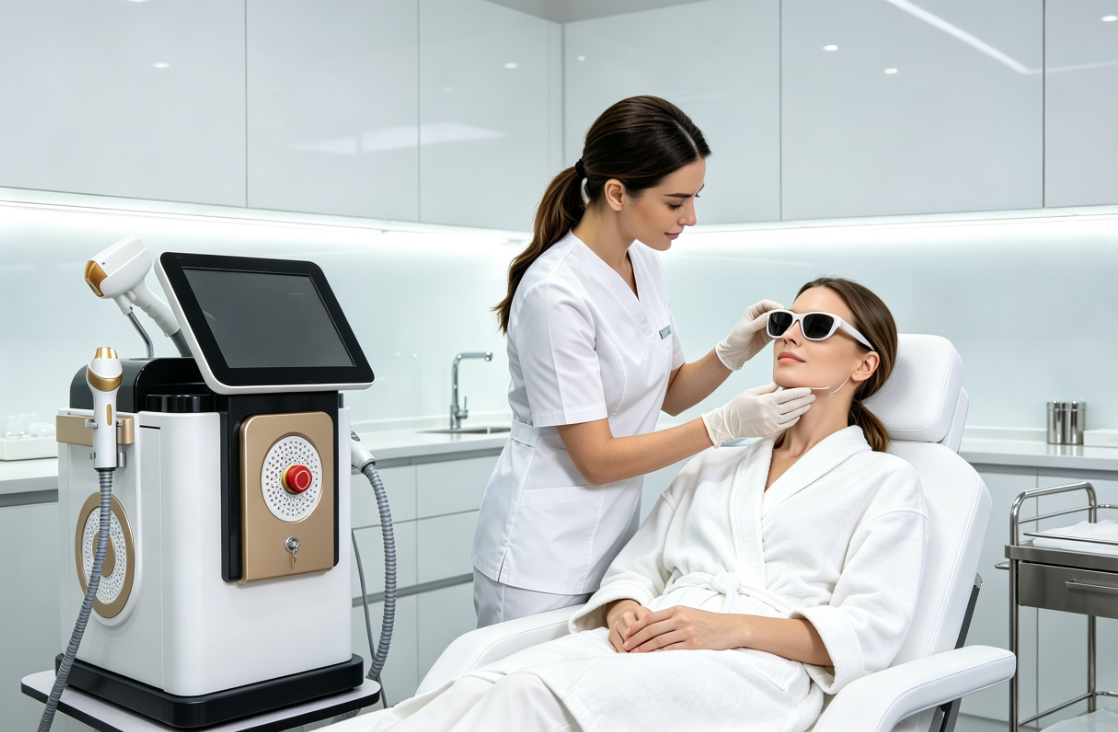
CLINICAL SAFETY WORKFLOW
Equipment Safety Depends on Qualified Use
Appropriate training, treatment-room controls, wavelength-specific eye protection, client assessment, parameter selection and post-treatment documentation remain essential throughout clinical operation.
No device is risk-free. Providers must follow the instructions for use, applicable local requirements and their professional scope of practice.
Operational Safety for Busy Clinics
High-volume use requires verified duty cycles, consistent maintenance and clear operating procedures.
⚙️Declared Duty Cycle
Confirm recommended operating intervals, ambient conditions and cooling requirements for the selected model.
✅Output Verification
Follow the manufacturer’s inspection, calibration and service schedule for consistent equipment performance.
❄️Cooling-System Checks
Inspect coolant level, circulation, filters, vents and handpiece cooling according to the instructions for use.
🔍Handpiece Inspection
Check treatment windows, tips, cables, connectors and contact surfaces before clinical operation.
📋Traceable Records
Maintain treatment, cleaning, maintenance, fault and service records according to clinic and local requirements.
🛠️Technical Support
Training, troubleshooting information, replacement parts and qualified service support clinic continuity.
Safety Information for Procurement Decisions
Ask for evidence that matches the exact equipment you intend to purchase and the market where it will be used.
Product-Level Evidence
Match certificates, declarations, reports, labels and manuals to the model name, manufacturer and intended purpose.
Clinic Implementation
Plan operator training, room controls, protective eyewear, maintenance, incident response and local regulatory obligations.
Supplier Support
Confirm warranty scope, response process, spare parts, remote assistance and available technical training before ordering.
Frequently Asked Questions
Are all Mecavie systems supplied with the same compliance documents?
No. Documentation depends on the exact model, intended purpose, classification and destination market. Request a model-specific document package before ordering.
What should a clinic verify on a CE or UKCA document?
Check the legal manufacturer, model identification, applicable legislation, conformity-assessment route, issuing body where applicable, validity and consistency with the product label.
Does a compliance mark mean a device has no clinical risk?
No device is risk-free. Safe use still depends on the intended purpose, trained operation, patient selection, protective measures, maintenance and adherence to the instructions for use.
What does EMC documentation address?
EMC documentation addresses applicable electromagnetic emissions and immunity requirements so equipment can operate within its intended electromagnetic environment.
What safety documentation can buyers request?
Buyers may request applicable declarations, certificates, test summaries or reports, product labels, instructions for use, maintenance information and local registration evidence.
Can multiple practitioners operate the same system?
Only appropriately trained and authorized personnel should operate professional equipment, following local scope-of-practice rules and the manufacturer’s instructions.
Request Model-Specific Safety Information
Contact our team for available technical specifications, compliance documentation, operator materials and service information.