ULTRA-SHORT PULSE TECHNOLOGY
Advanced Picosecond Laser Technology
Professional ultra-short-pulse laser technology for tattoo ink and selected pigment applications, with configurable wavelengths and treatment parameters.
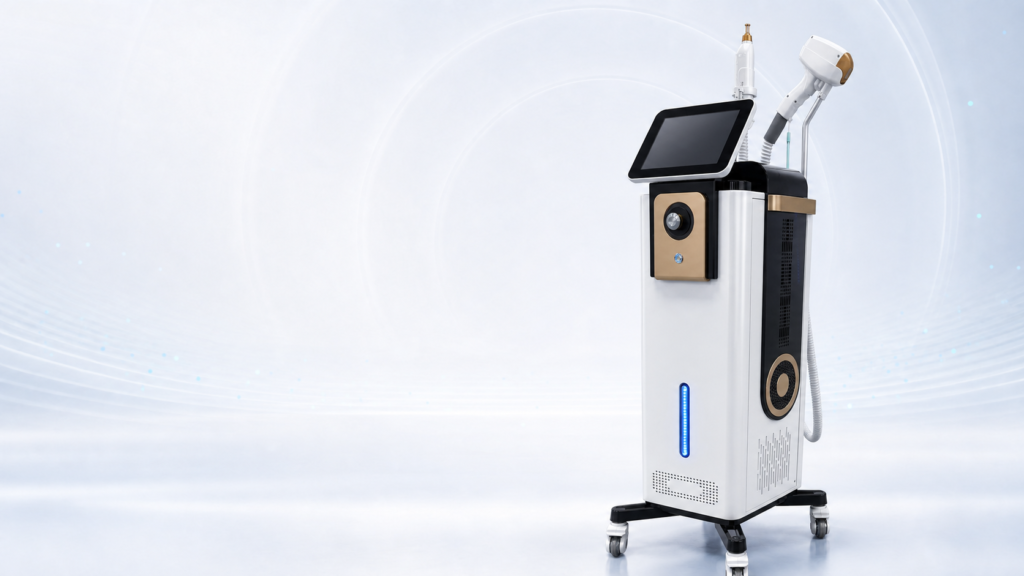
Technology Overview
Understanding the interaction between ultra-short laser pulses and targeted tattoo or pigment particles.
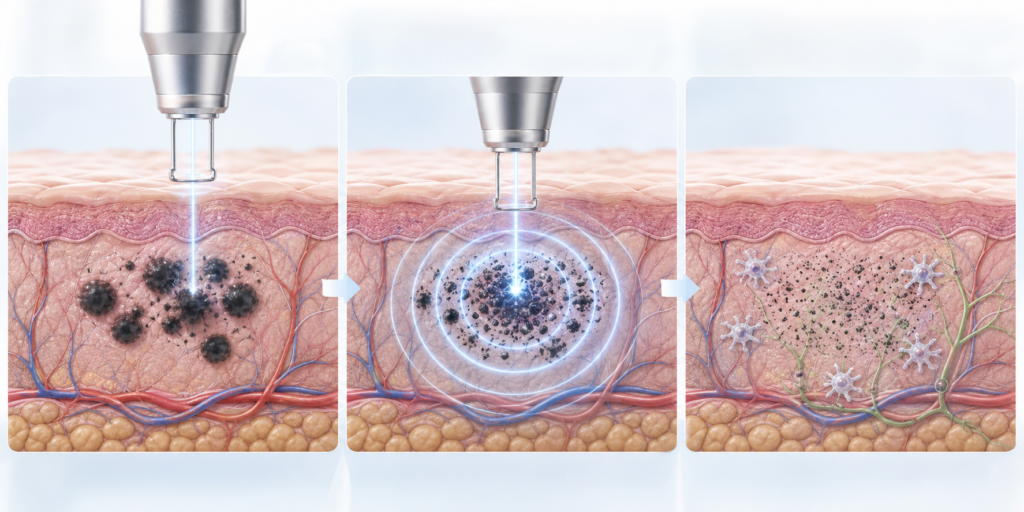
Conceptual illustration. Laser–tissue interaction varies with wavelength, pulse duration, fluence, spot size and target characteristics.
Picosecond-Range Pulse Delivery
Picosecond lasers deliver energy in pulses measured in trillionths of a second. Short pulse duration can generate a strong photoacoustic effect that fragments targeted particles while limiting the time available for heat to diffuse into surrounding tissue.
10⁻¹² s
Picosecond Time Scale
Acoustic
Particle Fragmentation Effect
5 Handpieces
Configurable Treatment Delivery
*Available wavelengths depend on the selected device configuration.
How Picosecond Laser Works
A controlled process from energy delivery to gradual biological clearance.
1
Ultra-Short Pulse Delivery
The selected wavelength and operator-controlled parameters deliver energy to the assessed target.
2
Photoacoustic Fragmentation
Rapid energy deposition generates mechanical stress that can fragment tattoo ink or selected pigment particles.
3
Gradual Clearance
The body gradually processes fragmented particles over time; response and session requirements vary by individual.
Key Technology Features
Engineering characteristics available across selected picosecond laser configurations.
Ultra-Short Pulses
Picosecond-range delivery supports high peak power over a very short pulse duration.
Controlled Thermal Spread
Short energy-delivery time is designed to limit thermal diffusion compared with longer pulses.
Configurable Wavelengths
Available wavelength options support different assessed tattoo colors and pigment targets.
Professional Controls
Adjustable fluence, spot size and frequency support provider-directed treatment protocols.
Available Wavelengths
Wavelength availability and cleared indications must be confirmed for the selected device.
532 nm
For Warm-Colored & Superficial Pigments
Commonly used for selected red, orange and brown tattoo pigments, as well as certain superficial pigmentation concerns. Treatment suitability depends on professional assessment.
1064 nm
For Dark Tattoo Pigments*
Commonly used for black, blue and other darker tattoo pigments. Its deeper penetration and lower melanin absorption can support treatment across a broader range of assessed skin tones.
1320 nm Carbon Peel*
For Carbon-Assisted Skin Treatments
Designed for carbon-assisted facial treatments that support the appearance of clearer, smoother skin and help manage visible oiliness. Availability depends on the device configuration.
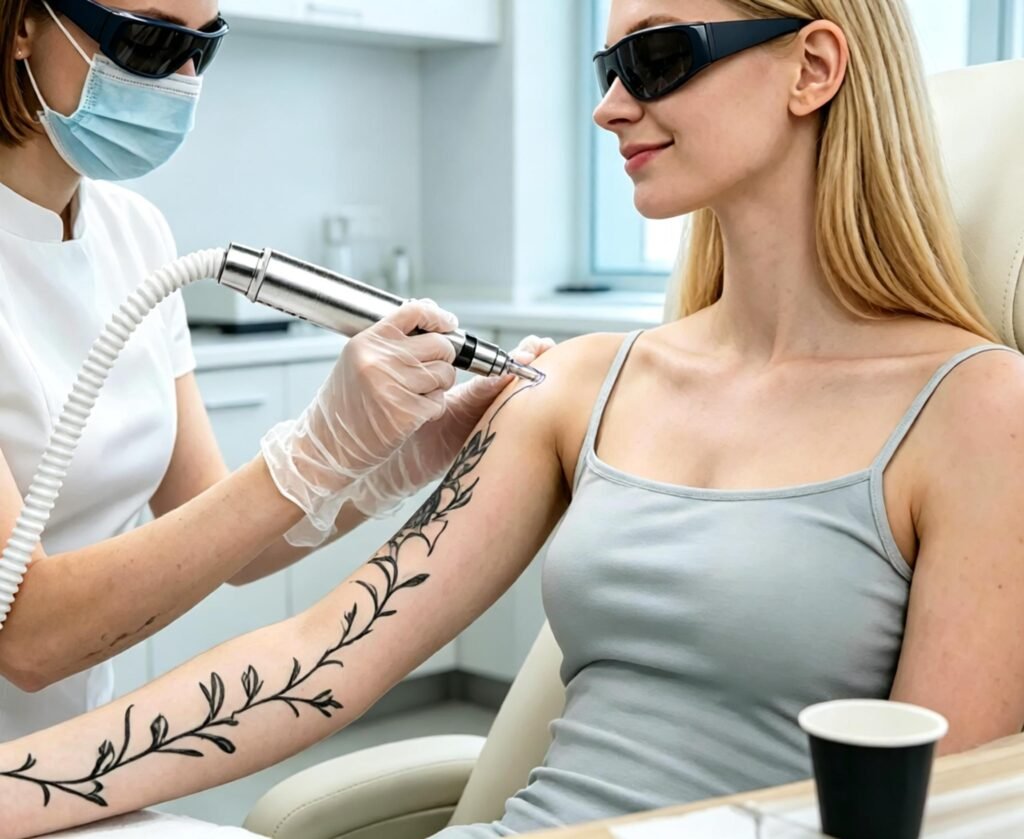
ENGINEERED FOR PROFESSIONAL USE
Precision, Control and Clinical Workflow
Professional treatment planning depends on tattoo composition, pigment characteristics, skin tone, medical history, wavelength selection and device-specific parameters. Appropriate training, eye protection and aftercare protocols are essential.
View Tattoo Removal Applications→
Technology Applications
Available applications depend on the device configuration, local clearance and provider qualification.
Tattoo Removal
Professional and amateur tattoo ink applications
Selected Pigment Targets
Subject to wavelength and device indications
Skin Texture Protocols
Only where supported by the selected system
Clinic Platform Options
Dedicated and multifunction configurations
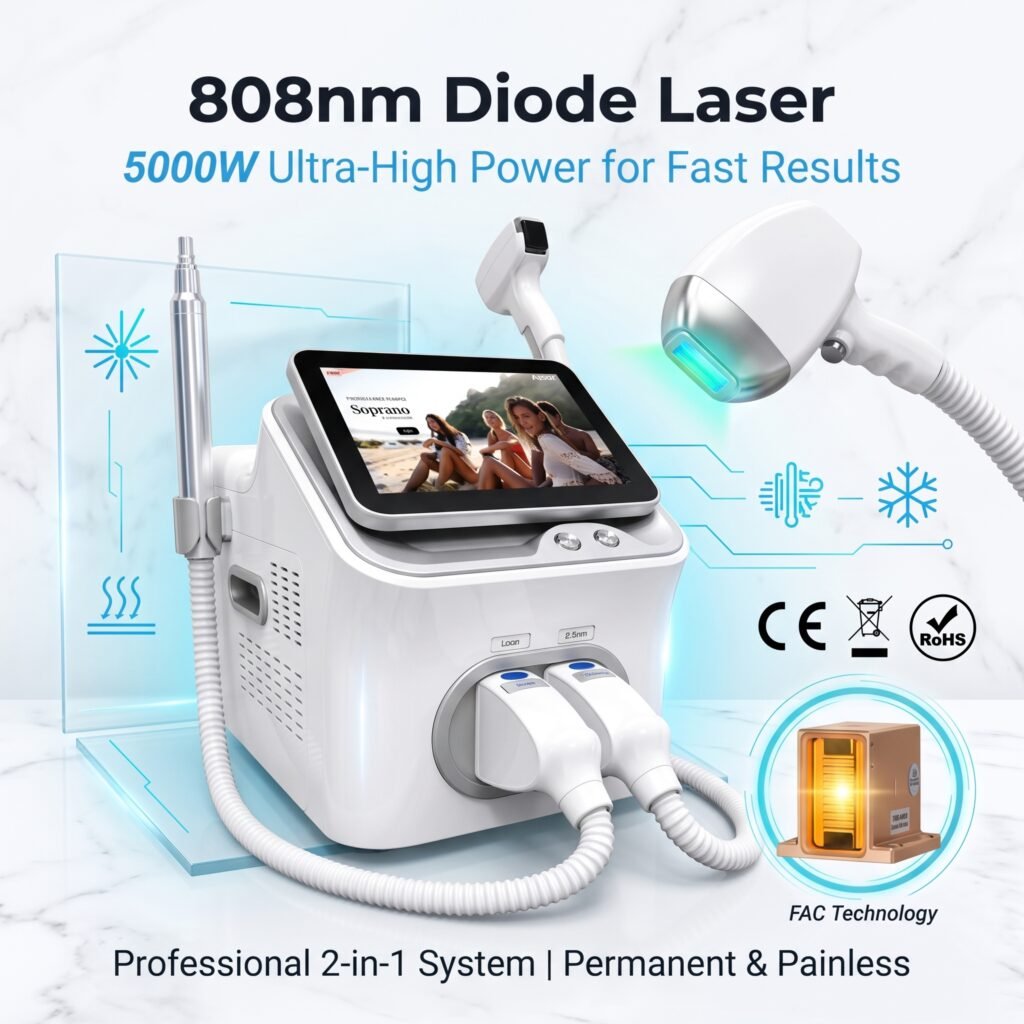
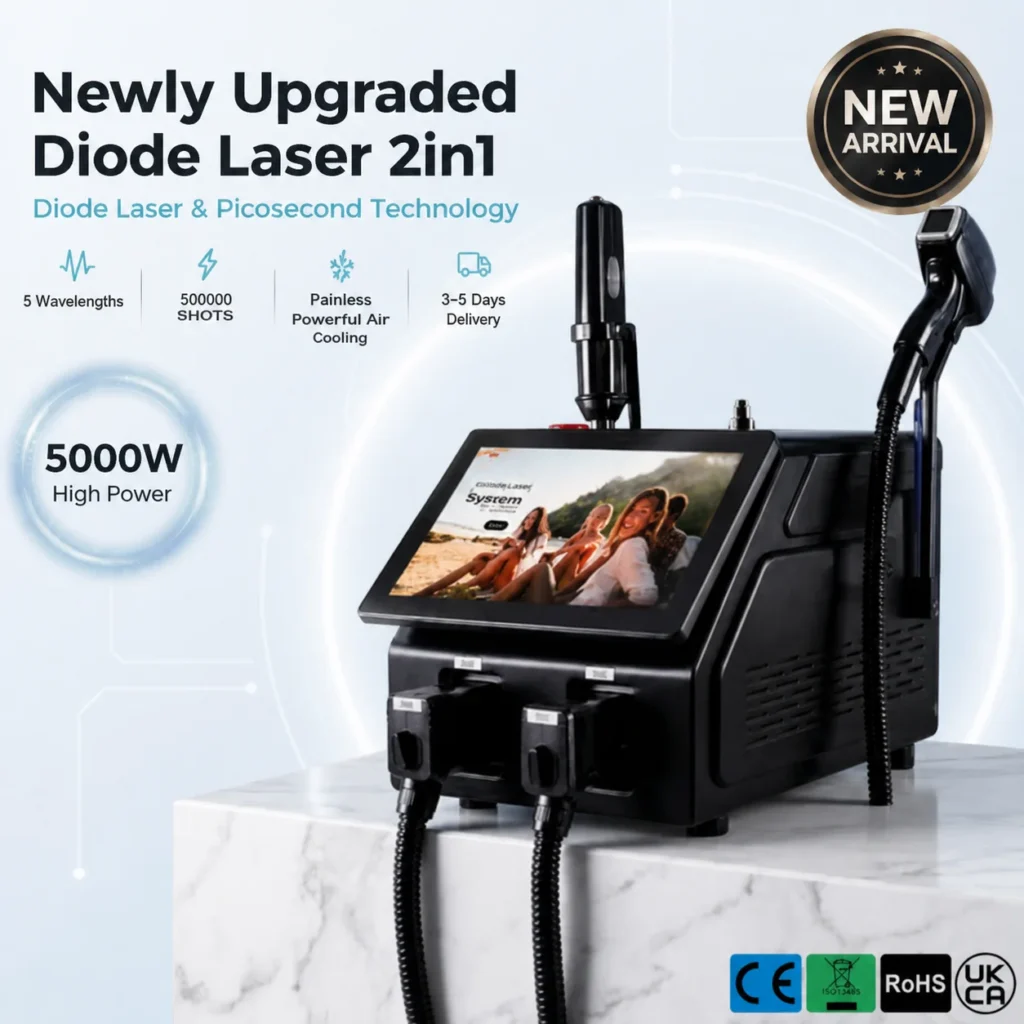
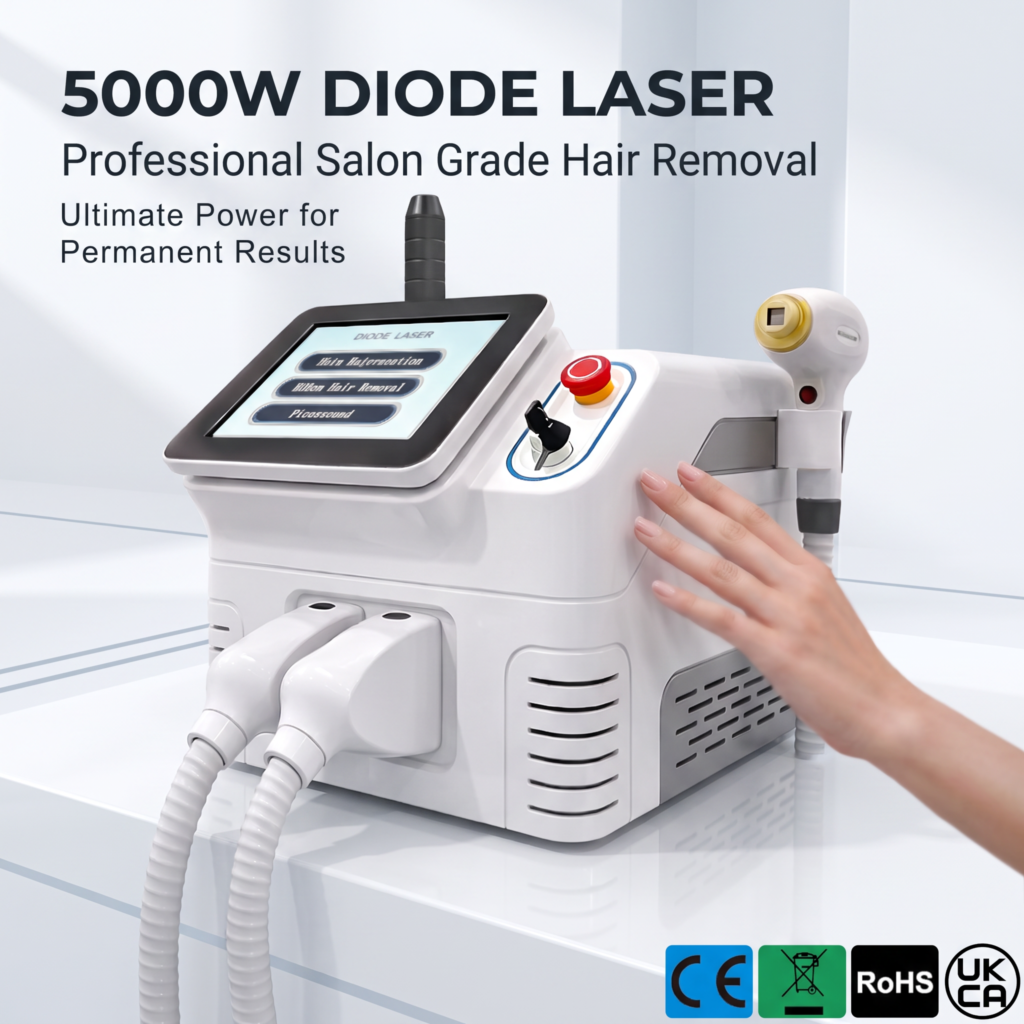
Recommended Picosecond Systems
Frequently Asked Questions
What is picosecond laser technology?
It is laser technology that delivers energy in picosecond-range pulses. The resulting photoacoustic effect can fragment selected tattoo ink or pigment particles.
Is picosecond technology always better than nanosecond technology?
Not for every target or client. Outcome depends on tattoo composition, pigment, wavelength, fluence, spot size, pulse characteristics, operator technique and individual response.
How many treatment sessions are required?
Session requirements vary considerably with ink color, density, depth, tattoo age, skin tone, treatment history and individual clearance response.
Is every wavelength suitable for every skin type?
No universal setting is appropriate for every client. Wavelength and treatment parameters require device-specific guidance and professional assessment.
Discover Professional Picosecond Laser Solutions
Contact our team for available specifications, wavelength configurations, OEM options and product recommendations.